Meet Lynn Fantom
As a business leader, I gained recognition for my advocacy of women and other underrepresented groups in the rough-and-tumble world of advertising.
Today as a journalist, I still focus on women, including their leadership in conservation and sustainable food production, now and in the past. I have written for Friends of Acadia magazine in Maine since 2019.
If I were making a video about my life, the first scene would show me climbing the carved stone steps of the Perpendicular Trail in Acadia National Park and then cut to descending stairs in New York’s Times Square to take the F train to Queens.
“The purpose of life, after all, is to live it, to taste experience to the utmost, to reach out eagerly and without fear for newer and richer experience,”Eleanor Roosevelt said.
I am grateful for my double life in Manhattan and Down East Maine. The contrast deepens my appreciation of both.
New England will always be the landscape of my soul, however. I grew up in a small town in Massachusetts, graduating in a high school class of 70. The brochure which then drew me to Smith College said, “The purpose of a college education is to make your mind an interesting place to live for the rest of your life,” so between that and Smith’s history of cultivating great women like Betty Friedan and Gloria Steinem, I spent four enriching years in Northampton, Massachusetts. With a major in Classical Languages and Literature, I won the sight-reading prize in Ancient Greek. Two of us competed.
When I graduated in 1975, Gloria Steinem’s words were ringing in my ears: "Nothing changes the gender equation more significantly than women's economic freedom.” I embarked on a business career, moving from Boston to Chicago to Minneapolis to New York, now climbing a corporate ladder.
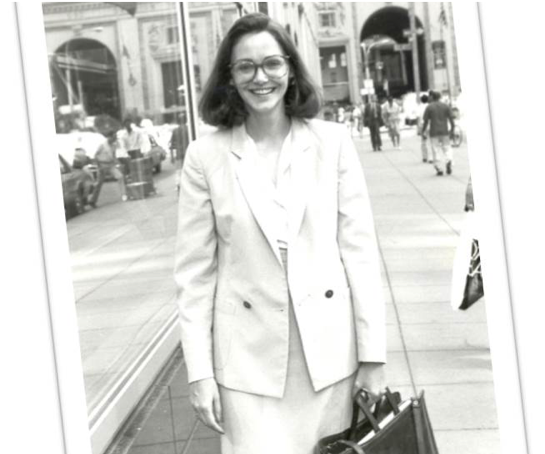
But in 1998, I jumped off, leaving the “staid world of direct marketing,” as the Wall Street Journal described it, to join a New York City digital start-up as its CEO. The WSJ profile featured one of those stippled portrait hedcuts of me, and I remember the very moment I saw the story on the front page of the business section because I was on my annual Christmas shopping trip with my mother and sisters. My mother hugged me.
The digital agency designed the first corporate website for Morgan Stanley, the first workplace intranet for Bristol Myers Squibb, and the first online banner ad campaign for Verizon (then Bell Atlantic).
These were the heady days of the early Internet. I was recruited to steer the firm toward profitability, while retaininng talent. We didn’t have a pool table, but people found their own amusements. One week the programmers were coding entries to a radio program to win a Harley. They won two.
At the same time, new disciplines yielded new projects and opportunities. But then on September 11th we hit a wall —we were four blocks from the World Trade Center. With the subsequent economic shock, the business failed in 2001.
Interpublic, then one of the world’s largest advertising holding companies, asked me to co-found a media agency. It was at a time when ad agencies were woefully White (only 5.3 percent of managers and professionals were Black) and men dominated the top ranks, but our company naturally embraced the diversity of New York City, Chicago, and Los Angeles, where it had offices. At monthly meetings to welcome new employees, people told stories of how their parents had come to the US from Poland, Puerto Rico, and Korea. We hosted potluck lunches and some of those parents even contributed homeland specialties!
Our company was 40 percent people of color and two-thirds women. By the time I retired in 2015, it had won eight “Best Places to Work” awards from entities like Crain’s, which weighted employee surveys as 75 percent of the score.
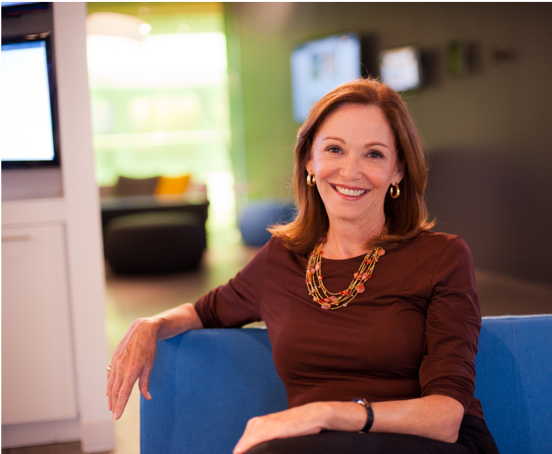
I applied to Columbia Journalism School, which required taking an on-site, timed writing test. The work was challenging, particularly when it required me to learn new software for
But I loved the training. For reporting and feature writing classes, I was assigned to cover neighborhoods in the Bronx and Brooklyn. Reporter’s notebook and iPhone in hand, I interviewed food cart vendors, subway riders, and garment manufacturers. I think a few of my classmates—just about all of them in their twenties—were surprised when I graduated with honors in 2018. I was sixty-five.
Now my reporting centers on women, history, sea farming, conservation and environmental issues. I have written for the Friends of Acadia magazine since 2019.